

 English
 русский
 Français
 Español
 Deutsch


Interior construction projects often require clear control of budget, appearance, and long-term performance. In many cases, Wooden Door MDF Melamine PVC Door solutions are used because of their flexible material structure, while Customized Interior MDF PVC Wooden Door systems are preferred when project-specific design adjustments are needed. Cost and design factors are closely linked and usually decided together during planning.
Basic Cost Structure
The cost of MDF interior doors depends on several combined elements rather than one single factor. Material selection, surface finish, and design complexity all play a role in the final result.
In Wooden Door MDF Melamine PVC Door products, the internal MDF structure is the key base. Density, thickness, and core construction can change material usage. When combined with Customized Interior MDF PVC Wooden Door requirements, additional design work may also affect processing time.
Material Factors
Material selection has a direct impact on overall cost. MDF boards, surface films, and internal filling methods all contribute to differences.
Key points include:
MDF density level
Door thickness
Internal core type
PVC or Melamine surface layer
PVC finishes often require lamination steps, while Melamine finishes use heat-pressed decorative layers.
In Wooden Door MDF Melamine PVC Door systems, these differences influence production flow. In Customized Interior MDF PVC Wooden Door projects, material combinations may vary depending on design needs.
Design Complexity
Design style also affects production effort. Simple flat doors are easier to process, while decorative designs require more steps.
Common design elements:
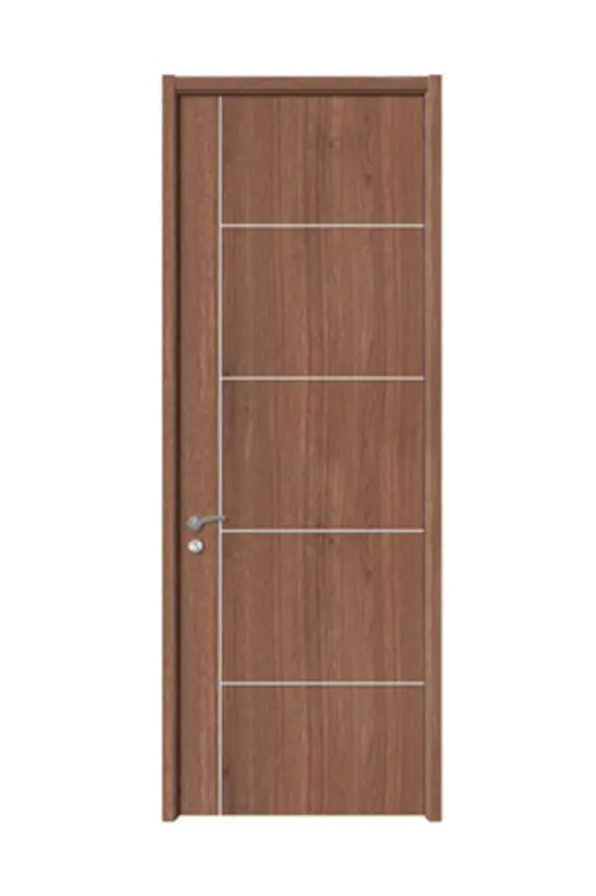
Flat or grooved panels
Simple or carved surface details
Edge shaping
Custom patterns
In Wooden Door MDF Melamine PVC Door applications, more detailed designs usually increase processing time. In Customized Interior MDF PVC Wooden Door projects, design flexibility is higher.
Surface Finish Cost Differences
PVC and Melamine finishes have different production methods, which also influence cost.
PVC uses film lamination to create decorative surfaces, often with wood grain or color effects. Melamine uses pressed decorative paper for a flat and stable finish.
In Wooden Door MDF Melamine PVC Door products, PVC is often used for more decorative styles, while Melamine is used for simpler designs. In Customized Interior MDF PVC Wooden Door projects, both options may be selected based on visual needs.
Order Quantity Effect
Production scale is another important factor. Larger orders allow smoother production flow, while smaller orders may require more setup adjustments.
Key points:
Batch production planning
Material usage efficiency
Packaging arrangement
Project scheduling
In Wooden Door MDF Melamine PVC Door systems, the order size can influence cost balance. In Customized Interior MDF PVC Wooden Door planning, orders are often arranged according to project phases.
Hardware Influence
Door systems may include frames, hinges, and locks, which also affect overall cost.
Common elements:
Frames
Hinges
Lock preparation
Installation accessories
In Customized Interior MDF PVC Wooden Door projects, hardware is usually considered early in design planning.
Application Differences
Different building types require different door solutions, which affects design and cost decisions.
Typical applications include:
Residential buildings
Hotel rooms
Office spaces
Public institutions
In Wooden Door MDF Melamine PVC Door use, requirements vary by environment. In Customized Interior MDF PVC Wooden Door systems, the design is adjusted based on the project function.
Design Planning
MDF doors allow flexibility in surface color, texture, and structure. PVC can create wood grain or modern tones, while Melamine provides uniform surfaces.
In Customized Interior MDF PVC Wooden Door projects, design adjustments are often made during early planning stages to match the interior style.