

 English
 русский
 Français
 Español
 Deutsch


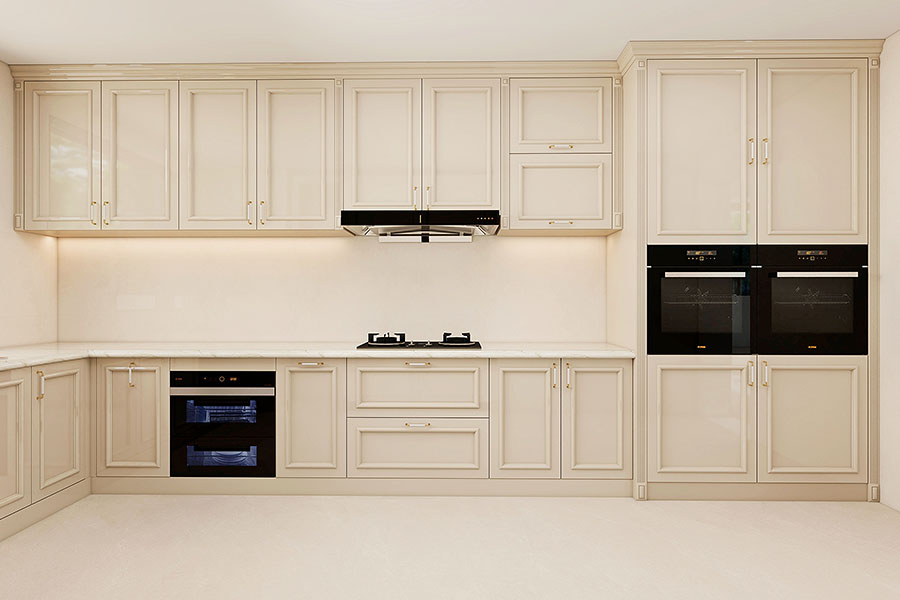
Kitchen renovation projects increasingly focus on practical storage, durable finishes, and materials that can handle everyday use. For importers, contractors, and kitchen furniture distributors, selecting the right Kitchen Cabinet involves more than appearance. Moisture exposure, hardware quality, available space, and installation requirements all influence long-term performance. As a manufacturer, we recommend evaluating the complete cabinet construction before placing an order, particularly for projects serving humid regions or households with intensive cooking needs.
Moisture Resistance Starts with Cabinet Construction
Humidity and occasional water exposure can gradually damage cabinet panels, especially around sink bases, exposed edges, and plumbing openings. Buyers should compare the moisture resistance of different board materials rather than relying on surface finishes alone.
Plywood, MDF, and particleboard each offer different advantages in cost, surface consistency, and structural performance. The suitable option depends on the application, environmental conditions, and construction quality. Proper edge sealing and protective finishes also help reduce moisture penetration. However, moisture-resistant kitchen cabinets should not be considered waterproof, and persistent leaks must be addressed promptly.
Storage Design Makes Better Use of Available Space
Limited kitchen space remains a practical challenge for residential developments, apartment renovations, and compact housing projects. Well-planned cabinetry can improve accessibility without increasing the overall footprint.
Useful configurations include:
- Deep drawers for cookware, pots, and frequently used utensils.
- Pull-out organizers for spices, cleaning supplies, and narrow storage areas.
- Corner cabinet solutions that make awkward spaces easier to access.
- Full-height cabinets that provide additional storage for dry goods and small appliances.
For custom kitchen cabinets, we encourage buyers to confirm internal dimensions and storage requirements before finalizing the layout. These details help reduce unused space and make everyday kitchen tasks more convenient.
Door Finishes Should Match Daily Usage
Cabinet doors influence both the visual character of a kitchen and the amount of maintenance it requires. Wood-grain finishes create a natural appearance, while painted surfaces support a wider range of colors and interior styles. Matte finishes can provide a contemporary look, but their resistance to fingerprints, scratches, and cleaning products depends on the coating system.
When comparing kitchen cabinet finishes, buyers should request samples and review cleaning instructions. Testing samples under representative lighting also helps prevent unexpected differences between the approved design and the finished installation.
Hardware Quality Affects Long-Term Reliability
Hinges, drawer slides, and handles receive repeated use throughout the cabinet's service life. Poorly matched hardware can cause uneven doors, noisy drawers, or reduced load-bearing performance.
Our recommendation is to evaluate hardware according to cabinet dimensions, expected loads, and opening frequency. Soft-close mechanisms can improve the user experience, while adjustable hinges simplify door alignment during installation. For commercial projects, consistent hardware specifications also make replacement and maintenance easier across multiple units.
Accurate Measurements Reduce Installation Problems
Even well-manufactured cabinets can create difficulties when site measurements are incomplete. Uneven walls, irregular corners, appliance dimensions, and plumbing positions may affect the final fit.
Before production, buyers and installers should confirm wall dimensions, ceiling height, countertop requirements, appliance clearances, and the locations of electrical and plumbing connections. A detailed drawing approved by the relevant project team helps clarify responsibilities and reduce avoidable modifications.
Manufacturing Quality Requires More Than Visual Inspection
A professional quality-control process should cover the cabinet box, panel dimensions, edge finishing, door alignment, hardware installation, and packaging. Buyers sourcing kitchen cabinets wholesale should also confirm material specifications, color consistency, assembly instructions, and replacement-part availability.
As manufacturers, we recognize that these checks are particularly important for distributors and contractors managing repeat orders. Clear specifications and documented inspections make it easier to maintain consistency between production batches and simplify communication throughout the supply chain.
Choose Cabinet Solutions Around Real Project Needs
The right cabinet specification balances appearance, storage capacity, durability, installation conditions, and budget. Rather than choosing materials or accessories based on trends alone, buyers should assess the intended market and expected usage before confirming an order. By working with an experienced manufacturer, importers, contractors, and distributors can develop a Kitchen Cabinet solution that fits their project requirements and supports reliable long-term use.